Showing posts with label Churches. Show all posts

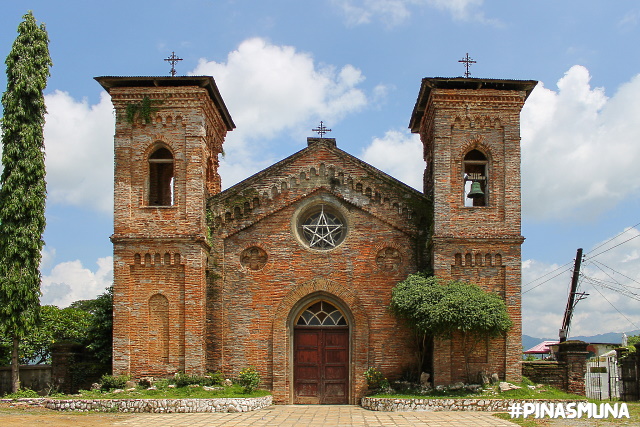
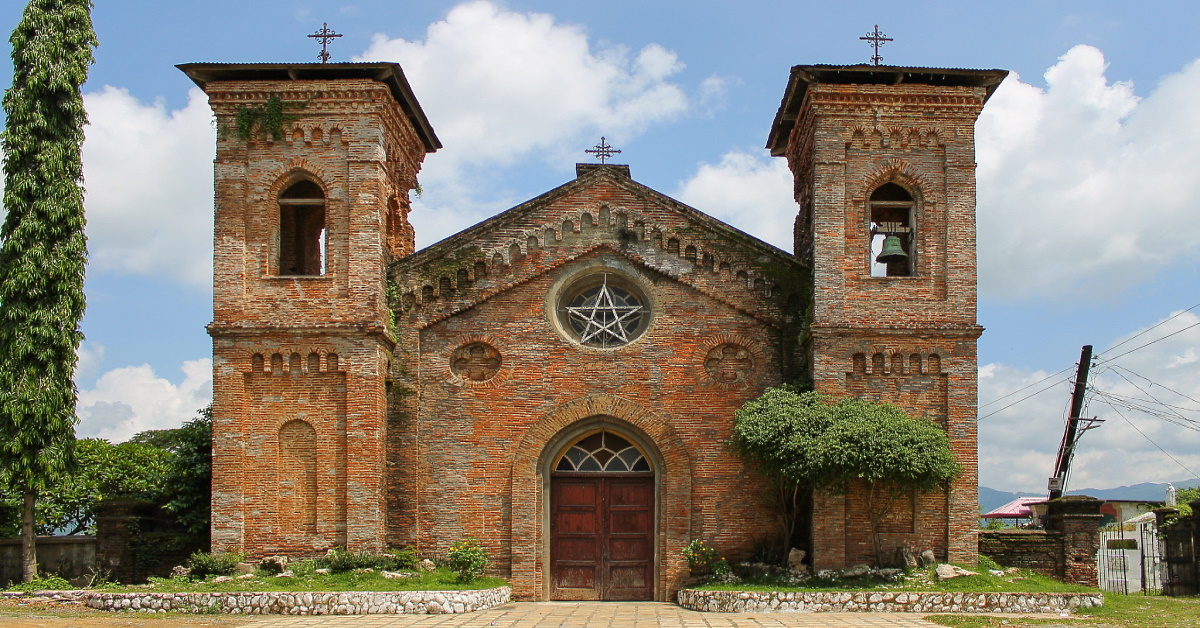
San Lorenzo Ruiz Shrine

San Lorenzo Ruiz Shrine in Bangued, AbraDESTINATIONS > ABRA > BANGUED

San Lorenzo Ruiz Shrine in Bangued, Abra

The San Lorenzo Ruiz Shrine is a Spanish-era church in the municipality of Bangued, Province of Abra, Philippines. The church was built entirely of red bricks and stands right next to the Roman Catholic Cemetery of Bangued. It is located along Santiago Street in sitio Camposanto.

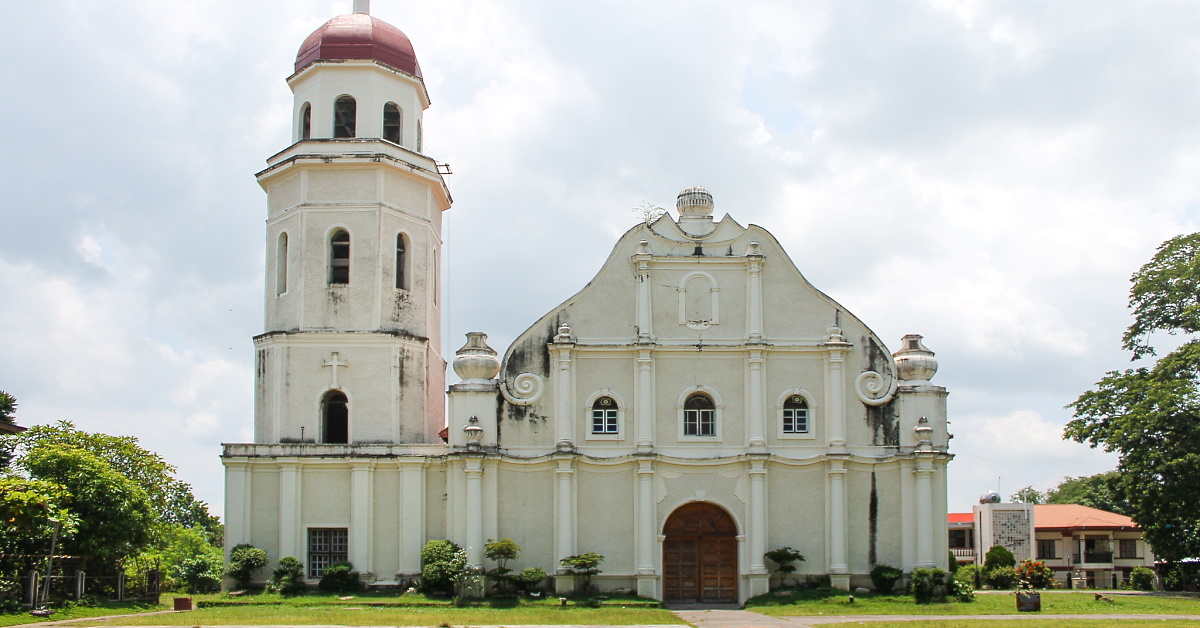
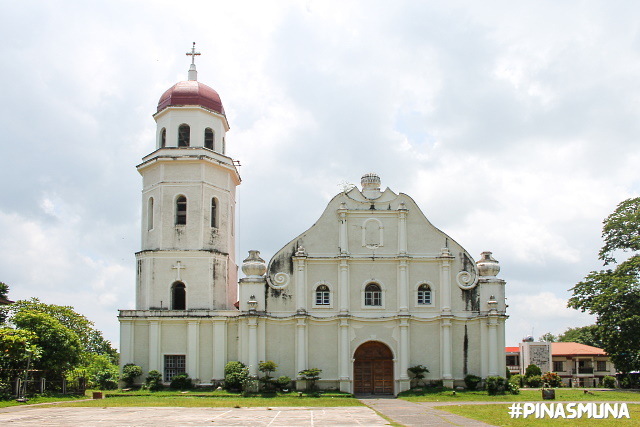
Bangued Cathedral

Bangued Cathedral in Abra, PhilippinesDESTINATIONS > ABRA > BANGUED

Bangued Cathedral in Abra, Philippines

The Bangued Cathedral, formally known as Saint James the Elder Parish Cathedral, is a Baroque-style cathedral located in the municipality of Bangued, the capital of the Province of Abra, Philippines. The church was built in 1807 and was elevated to a cathedral when the Territorial Prelature of Bangued was established in 1955. Bangued Cathedral has been the seat of the Diocese of Bangued since 1982. The Bangued Cathedral is one of the landmarks located along Taft Avenue, directly facing the Bangued Town Plaza.

Visita Iglesia in Makati


Makati has a multitude of Roman Catholic churches which you can consider for your upcoming Visita Iglesia. Within the vicinity of the Makati Central Business District alone, there is good mix of old and new churches to visit. Here are seven churches perfect for your Visita Iglesia. They are located so near to each other, you can complete your Visita Iglesia in just two to three hours.

Visita Iglesia in Albay

Visita Iglesia 2015

Visita Iglesia, a Spanish-influenced Filipino tradition of visiting seven churches during the season of Lent, allows the faithful to renew spiritual vows and commitments. It may perhaps be a great time as well for filial and friendly bonding and to see how our Catholic faith evolved along with the structures that maintain them.

Old Spanish Church Ruins of Pudtol, Apayao

Old Spanish Church Ruins of Pudtol, Apayao


Apayao is one of the least visited provinces by tourist in the Philippines because little is known about its attractions. Thanks to travel bloggers who spent time exploring this side of the Cordilleras to share to the world what Apayao has to offer. This year, we finally got the chance to visit Apayao and hopefully we can find something worth sharing on our blog.

Tayum Church

DESTINATIONS > ABRA > TAYUM

Tayum Church in Abra, Philippines

The Santa Catalina de Alejandria Parish Church, commonly known as Tayum Church, is a 19th-century Baroque church located in the municipality of Tayum, Province of Abra, Philippines. Tayum Church was constructed in the early 1800s by the Augustinians and was dedicated to Saint Catherine of Alexandria. Tayum celebrates its town fiesta every 25th of November.

Sts. Peter and Paul Cathedral in Sorsogon City


The Sts. Peter and Paul Cathedral, or the Sorsogon Cathedral, is perhaps the most distinguishable landmark in the city. It is the seat of the Parish of Sts. Peter and Paul and of the Diocese of Sorsogon. The Feast of Sts. Peter and Paul is observed on June 29 of each year. On that same date, the City of Sorsogon also celebrates the annual Pili Festival which showcases the pili nut through colorful street dances, trade fairs and cooking competition using the pili nut as an ingredient.

The Annunciation Orthodox Cathedral in Sucat, Parañaque

Annunciation Orthodox Cathedral in Sucat, Parañaque

The Annunciation of the Theotokos Orthodox Church in Sucat, Parañaque was consecrated in March 2000 by His All Holiness Bartholomew I, Archbishop of Constantinople, New Rome and Ecumenical Patriarch of Constantinople of the Eastern Orthodox Church. Because of its distinction as the first church in South East Asia to be consecrated by the Ecumenical Patriarch, it is now being referred to as the Annunciation Orthodox Cathedral.

Basilica of Saint Martin de Tours in Taal, Batangas


The Basilica of Saint Martin de Tours, which is considered the largest Catholic Church in the Philippines and in Asia, is one of the most popular tourist and religious attractions of the town of Taal in Batangas province. The original church structure was built in 1575 in a coastal barrio near the shore of Taal Lake. In 1754, the most powerful eruption of Taal Volcano ever recorded destroyed the whole town of Taal including the church. In 1755, the church was then moved to its present location on an elevated hill.

Dapitan City: Saint James Church


DAPITAN CITY, Zamboanga del Norte - During the time of Dr. Jose Rizal's exile in Dapitan, it was in this church where he heard mass every Sunday. The church was built by the Jesuits in 1871 and is located right at the center of Dapitan, next to the plaza.


The most striking feature of the church is its beautifully designed ceiling. The orange and white rectangles form a swirling pattern on the dome creating an optical illusion of depth and motion.


The church was named in honor of  Dapitan's patron, St. James the Greater. During the time of our visit, banners saying "Viva Señor Santiago!" adorn the streets of Dapitan setting the festive mood in the city for the week-long town fiesta, culminating on July 25, the Feast Day of St. James.


How to get there:

from Dipolog City
At the Dipolog City Bus Terminal, take a non air-conditioned bus bound for Dapitan. Inside Dapitan City, take any tricycle and tell the driver to take you to St. James Church. Alternatively, you can take a Rural Bus from Dipolog bound for Ozamiz, Pagadian or Cagayan de Oro. Tell the conductor to drop you off at Dapitan-Polo Junction. From the junction, take a tricycle and tell the driver to bring you to St. James Church. Total travel time is 30-45 minutes.

from Ozamiz City
At the Ozamiz City Bus Terminal, take a Dipolog-bound bus, just ask the terminal crew where the queue/line for Dipolog is (there is a separate queue for air-conditioned and non-air-conditioned buses. Air-conditioned buses usually come from Pagadian, Zamboanga City or Cagayan de Oro, and would only drop-off or pick-up passengers at Ozamiz City, so be prepared to wrestle your way into the bus. Air-conditioned buses bound for Dipolog leave every hour. There are non air-conditioned buses that begin their trip from Ozamiz City and they depart from the terminal every 30 minutes (usually only half full). Tell the conductor to drop you off at Dapitan-Polo Junction. From the junction, take a tricycle and tell the driver to bring you to St. James Church. Travel time to Dapitan is 6.5hours, fare is P230.00 (air-conditioned bus).
How to get back:

to Dipolog City
From Dapitan, there are non air-conditioned buses bound for Dipolog. Alternatively, you can take a tricycle from Dapitan and tell the driver to bring you to Polo Junction. At the junction, you can take Rural buses bound for Dipolog. At the Dipolog City Bus Terminal, take the tricycles passing outside the gate to your destination in Dipolog City. Tricyle fare is Php10.00 per person.

to Ozamiz City
From Dapitan, take a tricycle and tell the driver to bring you to the Polo Junction. From the junction, take the Ozamiz, Pagadian, Zamboanga City or Cagayan de Oro bound buses (air-conditioned and non air-conditioned) and get off at the Ozamiz City Bus Terminal (fare is P230.00 for air-conditioned buses). Take the tricycles stationed at the terminal to your destination in Ozamiz City (fare is Php10.00 per person or Php50.00 special rate if you don't wish to wait for other passengers). Total travel time is 7hours.

Immaculate Conception Cathedral in Ozamiz City


After a hearty lunch at Mooon Cafe, we visited the nearby cathedral. The Immaculate Conception Cathedral is the seat of the Roman Catholic Archdiocese of Ozamiz and is one of the five cathedrals within the Roman Catholic Ecclesiastical Province of Ozamiz.

Dipolog City: Our Lady of the Most Holy Rosary Cathedral

DIPOLOG CITY, Zamboanga del Norte - The Our Lady of the Most Holy Rosary Cathedral, or Dipolog Cathedral, is the seat of the Roman Catholic Diocese of Dipolog. Its principal patroness is the Our Lady of the Most Holy Rosary*, after whom the cathedral was named. It is one of the five cathedrals within the Ecclesiastical Province of Ozamiz.

The church building was constructed in 1894 and has undergone several renovations, the latest of which was in 2009 when the facade of the cathedral was covered with marble. The present altar is a replica of the retablo originally designed by Dr. Jose Rizal. The main attaction of the cathedral is the ceiling made of hardwood.


After taking photos of the church building and a short tour inside the cathedral, we crossed the street to Magsaysay Park. It is your typical town plaza with a children's playground, fishball and ice cream vendors.


The Dipolog Cathedral is part of the Lakbay Jose Rizal @150 travel program, in celebration of the 150th birth anniversary of Dr. Jose Rizal in 2011.

Calasiao: Sts. Peter & Paul Parish Church


CALASIAO, Pangasinan - It was our last day in Pangasinan and as planned, we would make a quick visit to Dagupan's neighboring town of Calasiao. In front of our hotel in Dagupan, we boarded a jeepney with a Calasiao signage. First on the day's itinerary was Calasiao's Sts. Peter & Paul Parish Church.

We usually schedule church visits on weekdays to avoid the "crowd" and capture postcard perfect photographs of the edifice. This time was different as we scheduled this visit on a Sunday when the faithful flocks to the church to hear mass.


The Pangasinan language is very much alive in Calasiao as the mass was said in the province's vernacular tongue. Though we did not understand a single word, we could still feel the solemnity of the celebration.


After the mass came the usual scenes: mothers buying flowers for their home altars and children holding a balloon on one hand and a bag of popcorn on the other.


See complete photo album on Facebook


How to get there

from Dagupan: along A.B. Fernandez Ave. or Perez Blvd., take a jeepney bound to Calasiao and tell the driver to drop you off at Calasiao Church (simbahan ng Calasiao).
How to get back

to Dagupan: in front of the church, take a jeepney bound for Dagupan.

Agoo: Basilica of Our Lady of Charity


AGOO, La Union - En route from San Juan, La Union to Dagupan City, Pangasinan, we made a quick stop at the town of Agoo for lunch and to visit its church, the Basilica of Our Lady of Charity. The town of Agoo was established by the Franciscans in 1578 while the original church was destroyed by an earthquake in 1892. It was later rebuilt and demolished in 1971.


The present edifice was constructed only in 1975 and it enshrines the image of the Our Lady of Charity, the beloved Apo Caridad of her devotees. Though less than a century old, the present structure with its cement-grey façade, has the same stark charm as its Spanish-era counterparts.


Eye-catching are the two conversely designed bell towers. The taller left tower is of the pagoda style with its multiple eaves, while the shorter right tower is of the Neo-Romanesque style with its round and semi-circular arches.

The Basilica of Our Lady of Charity is located along the North Manila Road (National Highway) across the Agoo Civic Center and beside Jollibee.

Tuguegarao City: Tuguegarao Metropolitan Cathedral


CAGAYAN - The Tuguegarao Metropolitan Cathedral, officially known as Saints Peter and Paul Metropolitan Cathedral, is the seat of the Archdiocese of Tuguegarao.

How to get there:

Entrance to the cathedral is located right at the corner of Luna and Rizal Streets in Tuguegarao City. Anywhere within Tuguegarao City, take a tricycle (PHP10.00 per passenger) and tell the driver to bring you to the cathedral. The driver may pick up other passengers along the way. Always pay the exact amount.

How to get back:

Tricycles do pass infront of the cathedral. Take any tricycle and tell the driver your drop-off point. Regular fare within Tuguegarao City is PHP10.00 per passenger. Always pay the exact amount.


View Larger Map

Piat: Our Lady of Piat Basilica

Photo Album: Piat, Cagayan: Our Lady of Piat Basilica

CAGAYAN - The basilica enshrines the 400 year old image of the Blessed Virgin Mary, Our Lady of Piat. The people of Cagayan make a pilgrimage to visit the shrine of their patroness to pray for miracle or intercession, especially during challenging times. A friend from Cagayan remembered her college days when she would visit the church a day before a major exam.

Coincidentally, the Senate President, Juan Ponce Enrile, himself a native of Cagayan and a devotee of Our Lady of Piat, went to the basilica at the same time of my visit. That was two days prior the commencement of an impeachment trial where Senator Enrile would act as the preciding officer.

From this trip to Piat I learned about how deeply rooted the people of Cagayan are in Faith and how much devotion they have to Yena Tam Ngamin.

How to get there:

The Our Lady of Piat Basilica is located in the town of Piat, approximately 34 kilometers north-west of Tuguegarao City. From Tuguegarao City, take a tricycle (PHP10.00 per passenger) to the West Terminal along Buntun Highway. Take the van bound for Piat (PHP60.00 per passenger). Travel time is about 45 minutes. Some vans drive all the way to the church, some would stop at the terminal. Tricycles are available within the town (PHP10.00 per passenger).

How to get back:

The van terminal is just a 5 minute downhill walk away from the church. At the terminal, take the van bound for Tuguegarao City (PHP60.00 per passenger). Travel time is about 45 minutes.


View Larger Map

Iloilo City: Molo Church


It was 6:00pm when we arrived at the van terminal at the Molo District of Iloilo City coming from a two hour trip from San Jose, Antique.

Before going back to the hotel, we passed by the famous Molo Church. Officially called St. Anne Parish, the original church was built in 1831 and the construction of Gothic-Renaissance-styled church began in 1869.

Among the visitors of the church was Dr. Jose Rizal during his trip to Manila in 1896 after being exiled to Dapitan.

The Molo Church is part of the Lakbay Jose Rizal @150 travel program, in celebration of the 150th birth anniversary of Dr. Jose Rizal.

See complete photo album: Iloilo City, Iloilo: Molo Church (July 29, 2011)

Miag-ao: Miag-ao Church


From the Molo Bus Terminal in Iloilo City, we took a van bound for San Jose, Antique. After almost an hour of waiting, the van was finally full and ready to leave Iloilo City at 11:00am. It was a smooth ride along the Iloilo-Antique Road (National Highway), passing through sleepy towns of southern Iloilo, with occasional view of the Panay Gulf to the left. We reached the town of Miag-ao at around 12:00 noon. We had a quick lunch at a local cafeteria and went to Miag-ao Church immediately after.

Miag-ao Church, officially called Church of Santo Tomas de Villanueva, was built in the late 1700's and was included in the UNESCO List of World Heritage Sites as one of the four Baroque Churches of the Philippines in 1993.

See complete photo album: Miag-ao, Iloilo: Miag-ao Church (July 29, 2011)

Malolos: Barasoain Church


En route to Tarlac, we made a side trip to Malolos, Bulacan to visit two Philippine hostorical sites. The first stop was the Barasoain Church.

Barasoain Church, officially called Our Lady of Mt. Carmel Parish Church, housed the Philippine Revolutionary Congress which convened in September 1898. It was in this same church where the Malolos Constitution was passed and the First Philippine Republic was inaugurated in 1899.

Because of the vital role it played in the revolutionary history of the Philippines, the church earned the title Cradle of Democracy in the East.

The Barasoain Church is featured on the obverse of the New Generation P200.00 Philippine Banknote.

See complete photo album: Malolos, Bulacan: Barasoain Church (July 10, 2011)